Case Study: Achieving the Perfect Lighthouse Score

Achieving the Perfect Lighthouse Score: A Guide to Modern Web Optimization
When assessing the quality of a digital platform, we rely on concrete data. Recently, we ran our platform through Google's Lighthouse auditing tool and achieved exceptional results: 98 Performance, 95 Accessibility, 96 Best Practices, 100 SEO, and a perfect 3/3 for Agentic Browsing.
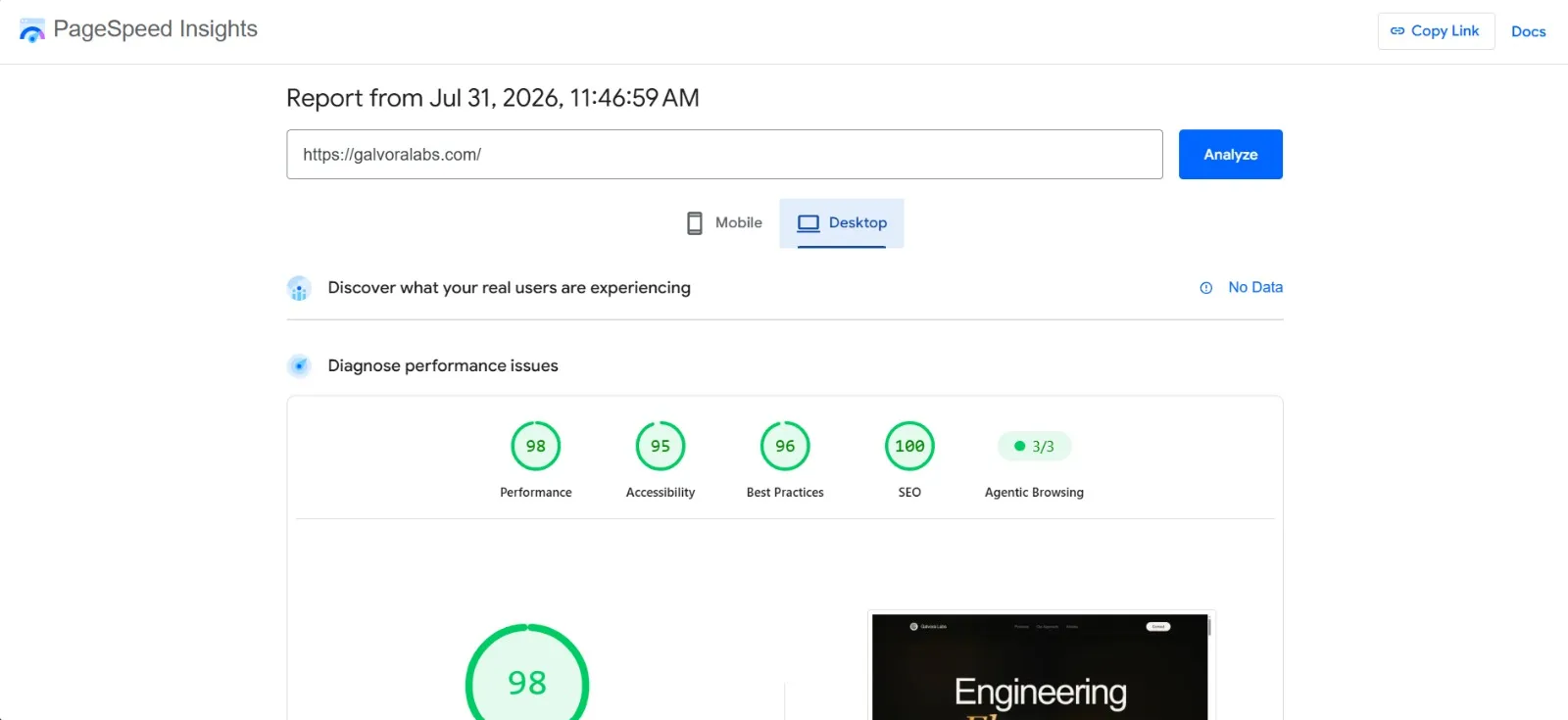
Achieving these scores is not a matter of installing the right plugins. It requires a fundamental shift in how a website is engineered from the ground up. Here is a breakdown of how we achieved these metrics and why they are critical for modern businesses.
1. Performance (98/100): The Need for Speed
A premium aesthetic is completely negated if a user has to wait three seconds for a page to load. Performance is a direct driver of conversion rates.
To hit a near-perfect performance score, we discarded bloated legacy CMS systems. Instead, we built on React 19 and Vite, utilizing strict asset optimization and code-splitting. Most importantly, we implemented Static Site Generation (SSG/Prerendering). This means our pages are served as lightning-fast, pre-built HTML files rather than requiring the server to construct the page on every single visit. The result is an instantaneous, fluid experience that scores flawlessly on Core Web Vitals.
2. Accessibility (95/100): Designing for Everyone
Accessibility is no longer optional. A 95/100 score reflects our commitment to ensuring our digital experiences are usable by everyone, including those using assistive technologies.
We achieved this by focusing on:
- Semantic HTML: Using the correct tags (
<article>,<nav>,<section>) rather than generic<div>containers. - ARIA Labels: Ensuring every form input, honeypot field, and icon-only button (like image gallery navigation) has descriptive
aria-labelattributes so screen readers know exactly what they do. - Contrast Ratios: Meticulously tuning the opacity of our brand colors to ensure foreground text remains perfectly legible against our dark-mode aesthetic without sacrificing the premium, atmospheric feel.
3. SEO (100/100): Speaking to Search Engines
Hitting a perfect 100 in SEO goes far beyond optimizing meta tags. It requires structuring the data in a way that search engine algorithms can effortlessly parse.
We implemented comprehensive JSON-LD Structured Data across our platform. Every product, blog post, and FAQ section injects a highly specific schema into the <head> of the document. This translates our visual content into the exact machine-readable format that Google uses to generate rich snippets and authoritative search results.
4. The New Frontier: Agentic Browsing (3/3)
This is the metric that separates legacy websites from future-proof platforms. Agentic Browsing measures how well your site is optimized for AI crawlers (like ChatGPT, Claude, and Perplexity).
We scored a perfect 3/3 by implementing the emerging llms.txt standard. By providing a clean, markdown-based summary of our entire company, manifesto, and FAQs in a standardized file, we ensure that AI bots can perfectly index and understand Galvora Labs. When a user asks an AI about our business, the AI doesn't have to guess based on scraped HTML, it reads the exact, structured truth we provided. Preparing for AI is the new SEO.
The Galvora Standard
Hitting these metrics takes an obsessive level of engineering. But this isn't just an internal case study, this exact architecture is baked into every single Website Kit and Custom Project we deliver.
When you build with Galvora Labs, you aren't just getting a beautiful design; you are inheriting a foundation engineered for absolute technical perfection.
Curious about the exact code and configuration we used to achieve this? We will be releasing a complete Developer's Guide to Agentic Browsing & Lighthouse Optimization very soon. Stay tuned to our technical blog.
Ready to elevate your digital presence?
Implement these exact performance standards and luxury aesthetics into your next project.